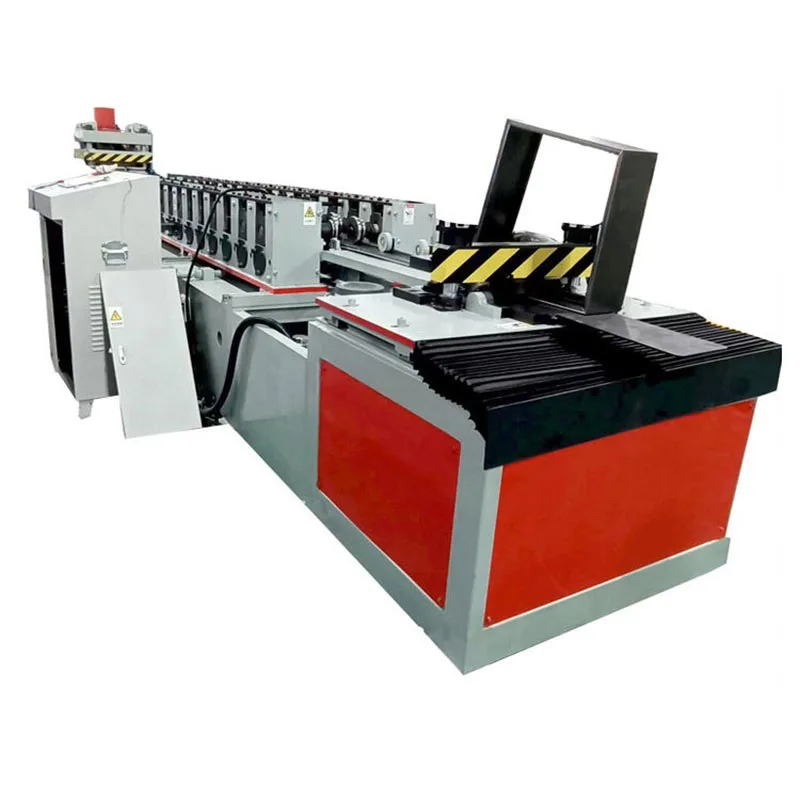
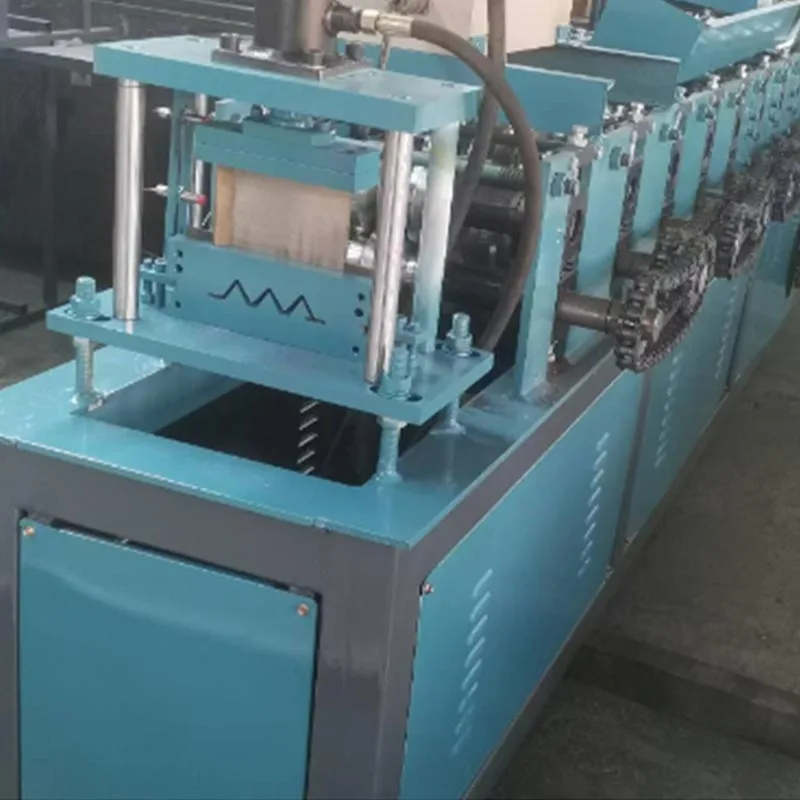
It is an automated production line. It is designed to create gusset plates. A gusset plate is a thick, often triangular-shaped piece of steel. You find them everywhere in metal structures. They are the vital connectors at the joints of beams and trusses. They hold the frame together. They transfer force and provide strength.
But a flat plate can bend or buckle under heavy load. The solution is to stiffen it. This is where the roll forming machine comes in. It takes a flat, pre-cut metal sheet and feeds it through a series of powered rollers. These rollers progressively bend all four edges of the plate upwards. They create a strong, 90-degree lip or flange. This process is called flanging.
This bent edge is the key. It turns a flimsy flat sheet into a rigid, box-like component. The machine does this with incredible speed and precision. It is a continuous, automated process. One end takes in blank sheets. The other end outputs finished, stiffened gusset plates, ready for use.
What are the advantages of this product?
First, think about speed and efficiency. Traditional methods involve manual labor. A worker might use a press brake. They would have to position the plate, make a bend, reposition it, and make another bend. It is slow and tiring. The Gusset Plate Roll Forming Machine changes everything. It automates the entire sequence. It can produce dozens of finished plates every minute. For a large construction project requiring thousands of gussets, this speed is revolutionary. It dramatically shortens production timelines.
Next, consider quality and consistency. Human workers are skilled, but they can make mistakes. A bend might be slightly off-angle. The dimensions might vary by a millimeter. In structural engineering, such small errors can cause big problems during assembly. The machine eliminates this variation. Every single plate that comes off the line is identical. The uniformity of the flange height, angle, and overall shape is crucial. It guarantees structural integrity and enables much faster, easier on-site assembly.
Then there are the cost savings. This works in two ways. The initial thought is the reduction in labor. One machine with a single operator can replace several skilled workers. This saves money on wages. The second saving is more subtle but just as important: material saving. The flanged edge makes the plate so much stronger. This means engineers can specify a thinner, lighter-grade steel for the same job. The plate performs better but uses less material. This cuts down on raw material costs significantly.
Finally, we have safety. Metal fabrication is inherently risky. Workers handle heavy, sharp-edged steel plates. Press brakes and other bending tools are powerful and dangerous. Automating the flanging process removes the operator from these direct hazards. The machine does the heavy and risky work. This creates a much safer workshop environment.
Where is This Gusset Plate Roll Forming Machine Used?
The application of this Gusset Plate Roll Forming Machine is focused on one major industry: metal construction. Anywhere you see a large steel frame, you will likely find gusset plates made by a machine like this.
The most common use is in Pre-Engineered Metal Buildings. These are the warehouses, factories, and large retail stores that dot our industrial landscapes. These structures rely on a skeleton of steel trusses. The gusset plates are the nodes that connect the beams of these trusses. The machine produces these connectors in massive quantities.
It is also essential for roof and floor truss manufacturing. Large-span roofs for stadiums or aircraft hangars need immense strength. The truss system provides this strength. The gusset plates are its joints. The same logic applies to transmission towers and communication towers. These lattice structures are essentially a network of steel bars connected by gusset plates.
Other key applications include heavy-duty storage rack systems. The tall pallet racking in warehouses uses gusset plates to stabilize the frames. Some bridge components also use this technology. The machine ensures that every connector is strong, reliable, and uniform.