Products

Products

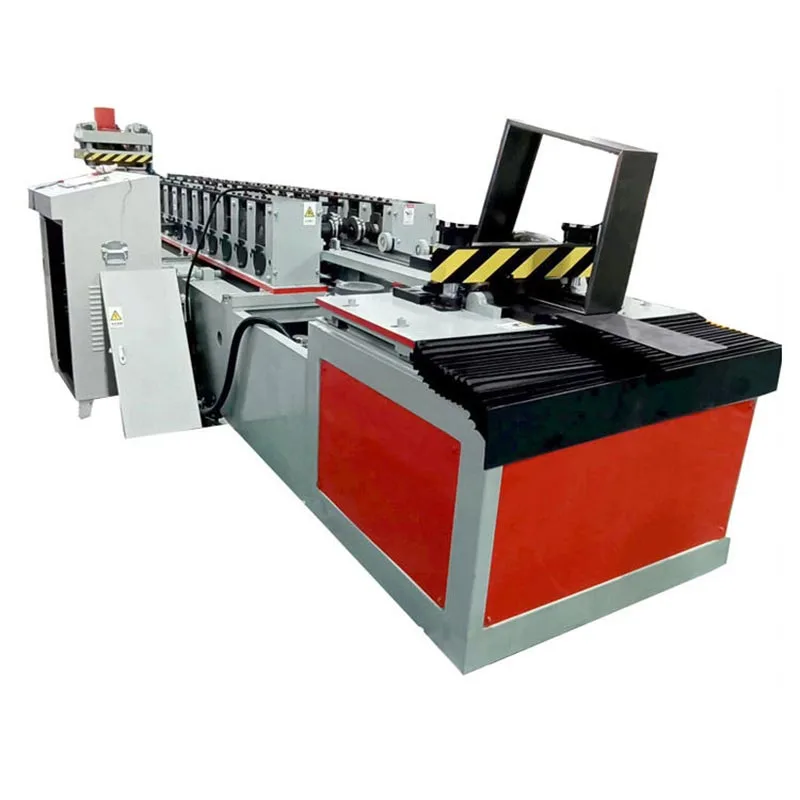
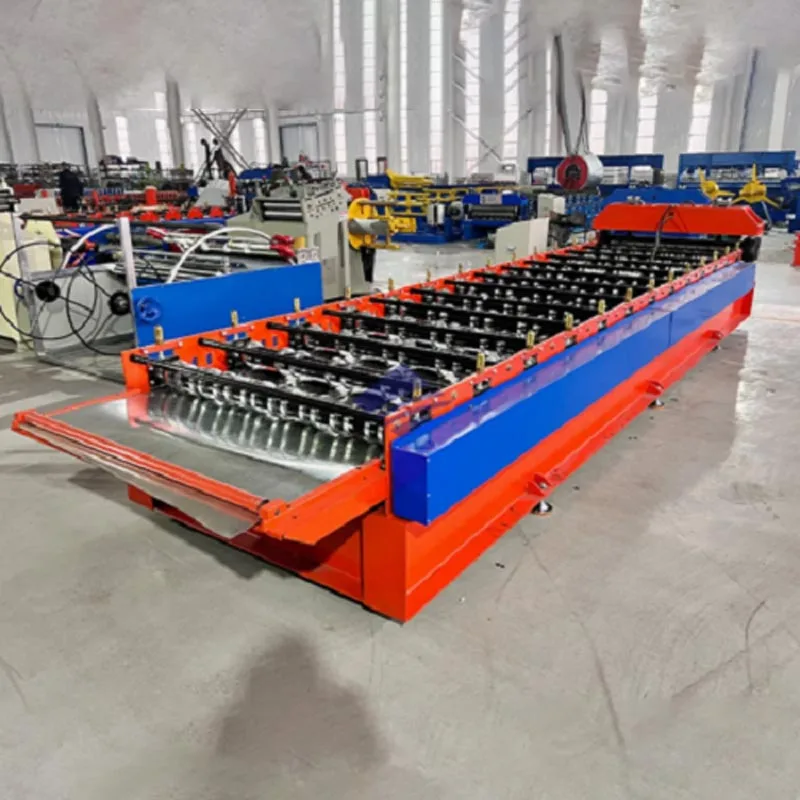
Engineering steel pedals Roll Forming Machine
  • Engineering steel pedals Roll Forming MachineEngineering steel pedals Roll Forming Machine
  • Engineering steel pedals Roll Forming MachineEngineering steel pedals Roll Forming Machine
  • Engineering steel pedals Roll Forming MachineEngineering steel pedals Roll Forming Machine
  • Engineering steel pedals Roll Forming MachineEngineering steel pedals Roll Forming Machine

Engineering steel pedals Roll Forming Machine

Engineering Steel Pedals Roll Forming Machines produced by Parfu International Trading Co., Ltd. They represent the pinnacle of modern construction material manufacturing. These machines are designed for continuous, high-volume production. They make profiled steel sheets used as permanent formwork. These sheets also act as structural reinforcement in concrete construction.
Rating: 5.0
(Rating Count: 1)

What are the specific uses of this device?

This Engineering Steel Pedals Roll Forming Machine makes steel mats. They are strong and have a grid-like pattern. They provide excellent slip resistance. They are primarily used for permanent scaffolding, work platforms, and stair treads in industrial settings.

The Machine manufactures sophisticated composite floor decking profiles. These profiles are for multi-story buildings. The decks are designed to act compositely with the concrete. This creates strong, lightweight, and efficient floor and roof systems. They are used in high-rise buildings, commercial complexes, and industrial facilities.

Together, these machines are indispensable for many businesses. Construction companies, steel profile manufacturers, and prefabrication plants use them. They help enhance productivity and ensure consistent quality. They also allow companies to meet the growing demand for efficient building solutions.

How the Machines Work?

These Engineering Steel Pedals Roll Forming Machines operate on a precise and efficient principle. Coiled steel is fed into the machine from a decoiler. This steel is typically pre-galvanized, galvalume, or cold-rolled. The material then passes through a series of roller stations. Each station incrementally bends the flat steel strip. The process forms a complex cross-section without removing any material. This method is far superior to press braking. It offers greater speed and consistency.

Core Components & Their Functions

Uncoiling & Feeding System: A heavy-duty decoiler holds the large steel coil. It often uses a hydraulic or electric mandrel. This makes loading new coils easy and efficient. A feeding guide then directs the steel strip into the machine. It ensures the strip enters the forming section perfectly straight and centered.

Pre-Punching/Notching System (Optional but Common): Many floor deck profiles require mechanical interlocking or shear stud welding. For this, an integrated high-speed servo punching unit is used. It perforates the steel strip with pinpoint accuracy before forming. This is a hallmark of high-end machines.

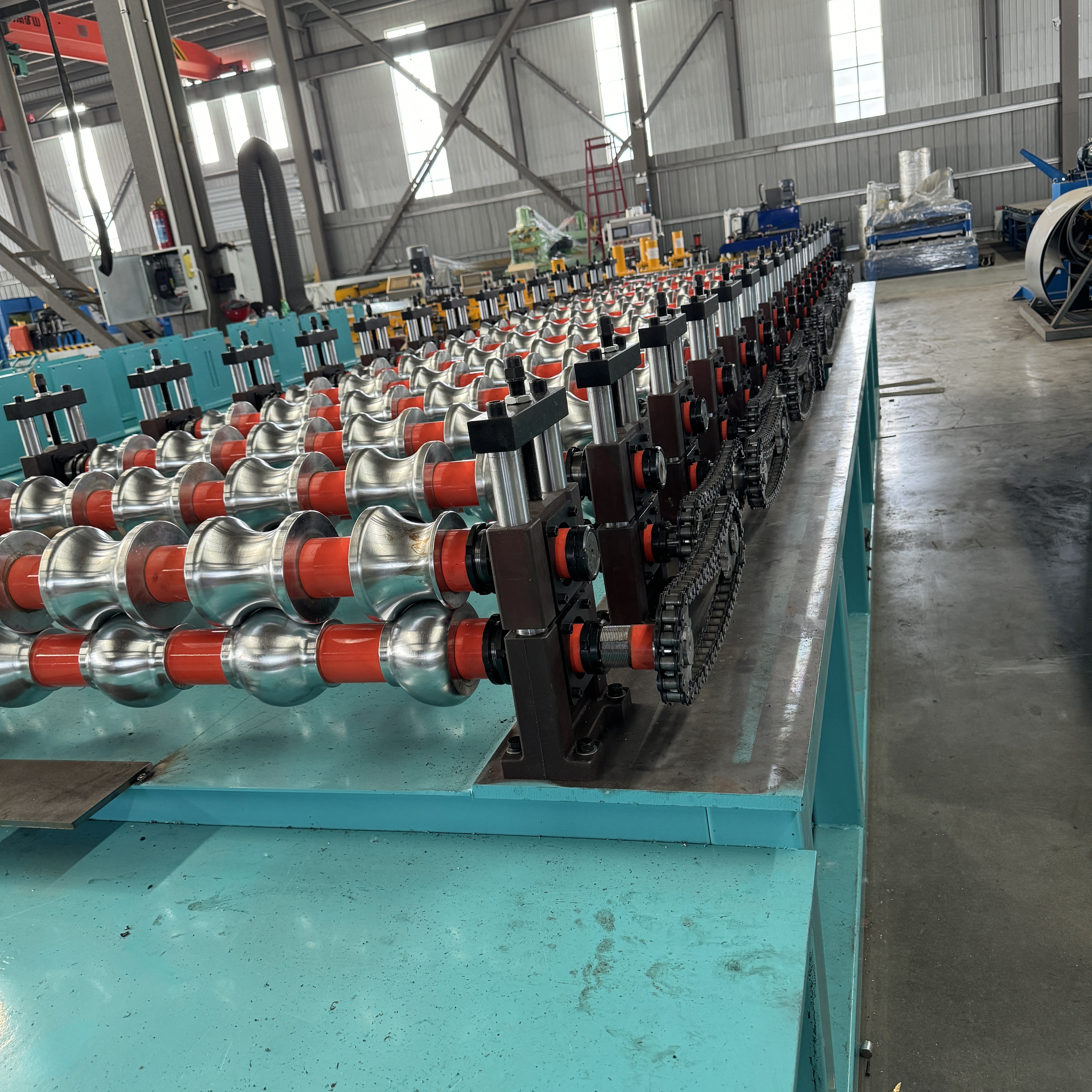
Roll Forming Station: It is the heart of the machine. It uses multiple pairs of hardened steel rolls. These rolls are mounted on sturdy shafts. They are supported by high-precision bearings.

Each station shapes the metal a little more. This process is progressive. It continues until the final profile is formed. The number of stations needed can vary. It depends entirely on how complex the profile is.

Cutting System: After forming, the continuous profile is cut to length. High-end machines use a synchronized flying cut-off system. This system is typically hydraulic or servo-electric. It moves with the profile during the cut. This ensures a clean, burr-free, and square cut. The production line does not need to stop.

Control System & HMI:A state-of-the-art Programmable Logic Controller (PLC) acts as the machine's brain. Operators control it through a simple touch-screen interface (HMI).They can easily input production settings, like length and quantity. The system also stores recipes for different profiles. It constantly monitors the entire process for consistency.

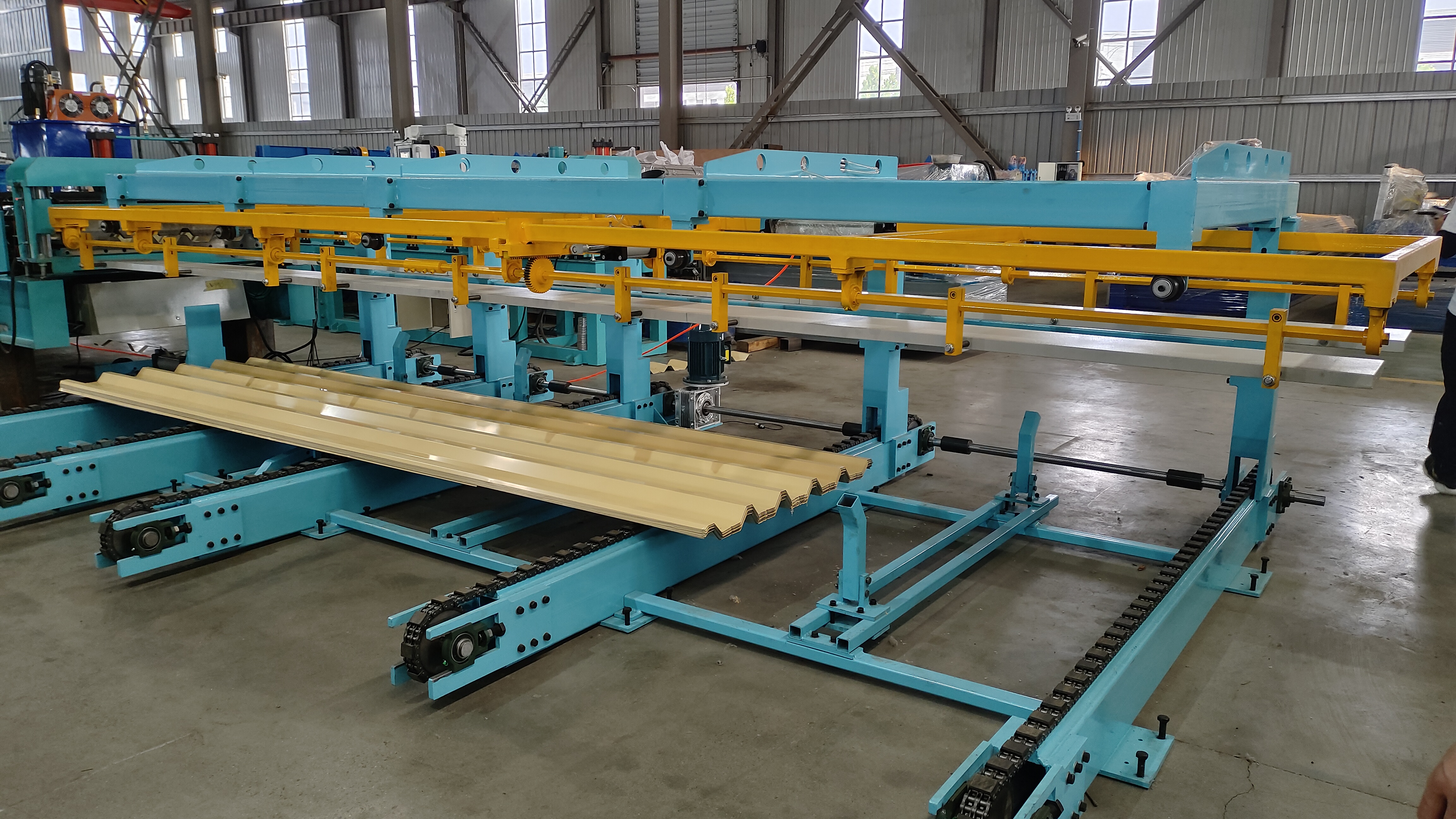
Output Conveyor & Stacking System: The finished profiles are conveyed away from the cutting area. They are then automatically stacked into neat bundles. These bundles are ready for strapping and shipment.

Application Scenarios

Engineering Steel Pedals Roll Forming Machine is used in:

Industrial Construction: Its primary use is for permanent structures in industrial construction.These include scaffolding, work platforms, and walkways. You will find these applications in facilities like factories, power plants, and refineries.

Infrastructure Projects: For stair treads and maintenance platforms. Used in bridges, tunnels, and large public facilities.

Shipbuilding: As anti-slip flooring and platforms within ships and offshore oil rigs.

High-End Floor Deck Profiles are used in:

High-Rise Buildings: They serve as composite floor decks in skyscrapers and office buildings.They create a fast-forming platform to support concrete pours.

Commercial Complexes: In shopping malls, hospitals, and airports. Ideal for large, open floor plans requiring rapid construction.

Industrial Warehouses & Logistics Centers: This product is ideal for industrial warehouses and logistics centers. It is used to construct large-span mezzanine floors and robust roof systems. This provides expansive, column-free spaces and durable overhead protection.

Multi-Story Car Parks: As a durable and quickly constructed decking system.

Technical Parameters (Typical Range)

Parameter Engineering Steel Pedals Roll Forming Machine High-End Floor Deck Machine
Profile Material Mild Steel, Q235, Q345 G300, G350, G550, SGCC, DX51D+Z
Material Thickness 1.5 mm - 4.0 mm 0.8 mm - 2.0 mm
Max. Coil Width 1000 mm - 1500 mm 1200 mm - 1500 mm
Production Speed 10 - 25 meters/minute 15 - 40 meters/minute
Forming Stations 12 - 18 stations 18 - 25+ stations
Drive Power 15 kW - 30 kW 22 kW - 45 kW
Cutting System Hydraulic Flying Cut Servo Flying Cut (High Precision)
Control System PLC with Touch Screen HMI Advanced PLC with Graphical HMI
Optional Features In-line embossing for slip resistance, automatic welding Integrated servo punching/notching, embossing ribs

Key Advantages

1. High Efficiency and Fast Production

The roll forming process is continuous and far faster than traditional methods. This speed brings key benefits: greater output, shorter lead times, and a better return on investment.

2. Superior Consistency and Precision

Every profile produced is identical. It meets precise tolerances. This removes human error, ensures a perfect fit on site, and cuts down on waste and rework.

3. Excellent Strength and Performance

The cold-forming process hardens the steel at each bend. This increases the profile's stiffness and load capacity without adding weight. High-end machines offer an embossing feature. It creates a textured surface on the profiles, resulting in an enhanced composite action with concrete.

4. Great Versatility and Flexibility

Modern machines allow for quick roll changes and adjustments. This enables a single production line to produce a wide range of profiles and sizes with very little downtime.

5. Lower Labor and Operating Costs

Our automated operational model is built for minimal staffing. A single operator runs the entire line, achieving major cost savings alongside enhanced safety.

6. An Integrated "All-in-One" Solution

These machines combine punching, embossing, and forming into one synchronized line. This removes the need for extra processing steps and simplifies the entire workflow.

6. In-Depth Details

Precision-Engineered Forming Rolls

The forming rolls are the heart of the machine. Crafted from high-grade alloy steel like Cr12 or 42CrMo, they undergo heat treatment before being precision-ground and polished to a mirror finish. This rigorous process guarantees a long service life, minimal wear, and a flawless surface on the final product.

Advanced Control and Automation

A PLC system acts as the nerve center. It integrates all machine functions:

Synchronization: It orchestrates a precise, simultaneous operation of the decoiler, forming drive, and cut-off system.

Recipe Management: This system stores settings for hundreds of profiles. It simplifies complex setups, allowing operators to change jobs with just one button.

Diagnostic Monitoring: It constantly checks motor loads, oil pressure, and temperature. It provides alerts and helps prevent damage.

Production Tracking: It records data like production meters, piece counts, and efficiency reports.

Robust Machine Structure

To consistently produce straight, accurate profiles, the design must minimize vibration and deflection. This is achieved by a base and stands built from heavily welded, heavy-duty steel plates—a non-negotiable foundation that provides the rigidity to handle high forces and maintain perfect roll alignment for years.

Customization and Scalability

These Engineering Steel Pedals Roll Forming Machines can be tailored to specific needs. This flexible platform is modular by design. You determine its configuration by selecting key modules: forming stations, punching power, stacking systems, and auxiliary integrations.

Durability and Easy Maintenance

Engineered for reliable 24/7 operation, these machines are built to endure. Their longevity is ensured by top-tier international components and a centralized automatic lubrication system, which work in concert to minimize wear and reduce maintenance downtime.

Engineering steel pedals Roll Forming MachineEngineering steel pedals Roll Forming MachineEngineering steel pedals Roll Forming MachineEngineering steel pedals Roll Forming Machine

Send Inquiry
Contact Info
Send an inquiry to Parfu to obtain pricing and project information for Roll Forming Machines, Sandwich Panel Machines, Roll Forming Machine Accessories. We guarantee a response within 24 hours.
Rating:
5.0
X
We use cookies to offer you a better browsing experience, analyze site traffic and personalize content. By using this site, you agree to our use of cookies. Privacy Policy
RejectAccept